Entry · Ref HF2PFGDU
Peptide Pureness & Quantitation Screening
- Posted
- 2026-09-23
- Last amended
- 2026-09-23
- Account
- @collinhsix915

Peptide And Peptoid Synthesis Core Identity confirmation verifies the specific secretagogue being examined. Peptides like BPC-157 and TB-500 utilized for injury healing applications ought to obtain complete confirmation. Identification confirmation is essential since substitution with various substances would basically change the research study strategy. The testing process includes particular steps to make certain precise results and correct sample handling. For these high-stakes circumstances, the cost of testing is unimportant compared to prospective repercussions of utilizing unverified items. For researchers following protocols from resources like the BPC-157 and TB-500 stacking overview, confirmed product high quality guarantees the protocol gets a fair evaluation. Most peptide purity evaluations utilize reversed-phase HPLC (RP-HPLC). In this setup, the stationary stage is hydrophobic (water-repelling), normally C18-bonded silica. The mobile stage is a slope of water and an organic solvent like acetonitrile, frequently with a percentage of trifluoroacetic acid (TFA) to hone the heights. Specifically customized peptides or cyclic peptide sequences are tough to validate, which affects quality assurance.
- You've acquired peptides from what seemed like a respectable vendor.
- Mass spectrometry (MS) confirms peptide identification by determining molecular weight.
- For most laboratory applications, a purity of 95% or higher is thought about research-grade.
- From example preparation to final reporting, we make sure every peptide satisfies rigorous high quality standards, encouraging your study and therapeutic advancements with self-confidence.
- Straight from the synthesizer with very little processing-- commonly simply bosom from the material and rainfall.
Thorough Peptide Release & Analytical Verification
These logical techniques are basic in peptide quality assurance and you will usually get HPLC and MS information with a research peptide order. The main logical methods for peptides include fluid chromatography (LC), generally HPLC, combined with mass spectrometry (MS) for precise molecular weight determination and sequence validation. Various other methods like electrophoresis, capillary electrophoresis (CE), and nuclear magnetic resonance (NMR) can likewise be made use of to assess peptide structure, fee, and pureness, guaranteeing extensive characterization. Peptides are tested via a combination of techniques, consisting of HPLC for purity, mass spectrometry You can find out more (MS) for series verification, and nuclear magnetic vibration (NMR) for structural evaluation. A 95% pureness implies that out of every 100 "books" in your batch, 95 are perfect copies and 5 have some sort of mistake. This guide breaks down what purity really suggests in peptide chemistry, how it's gauged, what the contaminations are, and just how to read the paperwork that confirms a peptide is what it declares to be. If you've ever browsed a peptide brochure, you have actually seen pureness numbers anywhere. These numbers get sprayed so frequently that it's very easy to gloss over them-- simply another specification on an item page. Chameleon Peptides markets study compounds exclusively for laboratory and logical objectives.What maker is made use of to examine peptide pureness?
Peptide pureness is consistently determined by HPLC (high efficiency liquid chromatography). This technique makes it possible for separation and relative metrology of each peptide manufactured. If paired to a mass spectrometer (MS), this gives molecular mass/ identification info of the target peptide and accompanying impurities.
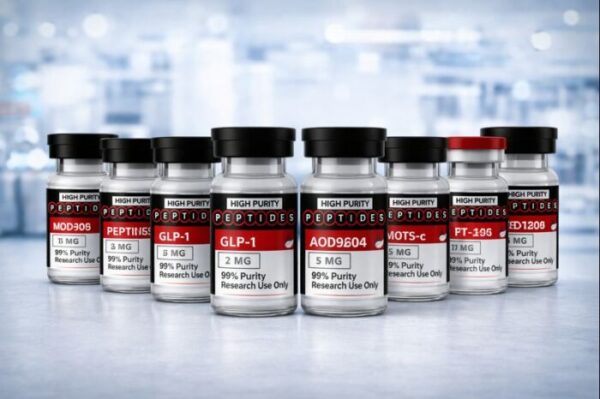
What Logical Techniques Were Made Use Of?
Understanding what peptides are is fundamental knowledge, but recognizing exactly how to validate their high quality is what separates effective researchers from those that have problem with irregular results. Mass spectrometry (MS) is made use of to verify the precise molecular weight and molecular identity of the compound, validating the correct amino acid sequence and ruling out alternative or architectural disparities. Utilizing mass spectrometry, we validate the molecular structure and amino acid sequence. This is the only means to make sure that the substance has the appropriate biological task and is precisely what it asserts to be. The software draws limits around each peak and determines the location below.Lead Confirmed (silver)
Choosing the right external research laboratory for peptide screening involves assessing several elements. A relied on lab needs more info to have demonstrable experience in peptide chemistry analysis-- for example, PhD-level chemists or biochemists on team who comprehend peptides' synthesis and destruction paths. Certification by relevant bodies (such as ISO/IEC or certification for GLP/GMP conformity) is a solid sign of quality. A recognized laboratory complies with strict guidelines for test accuracy and technique validation. You can typically examine if a laboratory is certified using its site or documentation; certification guarantees the lab's protocols and outcomes are held to international requirements. Palmetto Peptides provides batch-specific COAs with third-party HPLC and mass spectrometry information for all research peptide products. So, purity isn't simply a number on a certificate; it's basic to success. Peptide screening is the logical procedure used to validate that a research study peptide is both pure and appropriately determined. HPLC procedures chromatographic purity by dividing the target peptide from relevant impurities and calculating main-peak location percent. Mass spectrometry confirms molecular identity by checking whether the determined mass matches the expected peptide mass.Entry closed✓ Balanced